NumMatch: Number Logic Puzzles
BRAINWORKS PUBLISHING PTE. LTD.Board
4.55.58K Reviews
- Version
- 1.40.1
- Installs
- 10.00M
- Age Rating
- Everyone
Screenshots

Our Review of NumMatch: Number Logic Puzzles
 Analysis by Appyee
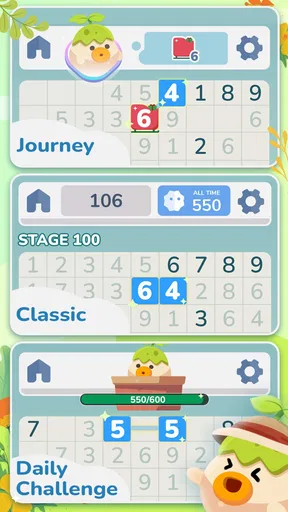
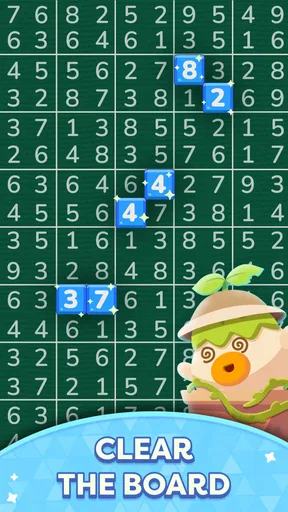
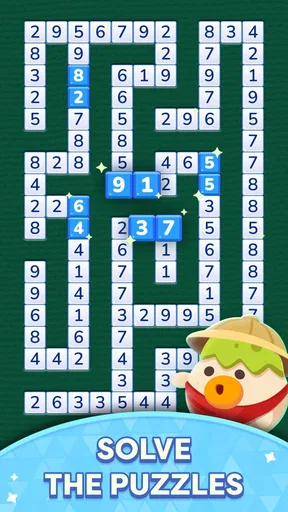
I spent time with NumMatch: Number Logic Puzzles as a quick, focused board game built around arranging and merging numbers. Its central idea is easy to understand, but the decisions become more interesting once the board starts filling up: every move affects the space available for the next one, so a careless match can leave an awkward layout that is difficult to recover.
That makes it a good fit for short breaks rather than a game I would choose for a long story-driven session. I can open it when I have a few quiet minutes, work through a puzzle at my own pace, and stop without feeling that I have abandoned a complicated campaign. The presentation is centered on number logic, not characters or narrative, which keeps the attention on planning and pattern recognition.
How the number puzzles feel in everyday play
The basic appeal is the tension between immediate progress and future flexibility. Merging a pair of numbers can make the board look cleaner, yet the best-looking move is not always the safest one. I found myself checking open spaces before committing, especially when several possible pairs were available. That small pause is where the game earns its “logic puzzle” identity.
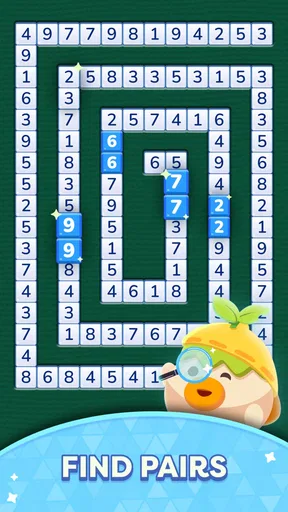
The wording around “ten or pairs” points to the two mental habits the game asks for: recognizing matching numbers and watching combinations that lead toward ten. In practice, I would not treat every available match as equally valuable. A move that preserves several open routes can be more useful than one that creates a larger number immediately. That is a simple but important lesson for new players.
My most useful routine was to scan the whole board before touching anything. I looked first for moves that removed numbers from crowded areas, then for combinations that would leave the most useful empty spaces. This is more reliable than playing from the top-left corner and reacting one move at a time. It also makes the game feel less random, because the player is actively managing the shape of the board.
A realistic use case is a commute, a waiting room, or a short pause between tasks. If I only have a few minutes, I can still make meaningful progress without learning a large rule set. It also works when I want something quieter than a competitive card game. The number-focused design gives the mind a small problem to solve without demanding the emotional attention of a multiplayer match.
The game belongs to the board category, although it feels closer to a digital number puzzle than to a traditional board game with opponents, dice, or a physical tabletop. That distinction matters when choosing it. Someone looking for social play, direct competition, or a board-game adaptation may find the experience too solitary. Someone who enjoys compact spatial decisions will understand its appeal quickly.
What I would learn before starting
New players should resist the urge to merge as soon as a pair appears. The first few moves are a chance to create room and keep options alive. I also recommend checking whether a number can be used in more than one possible combination. Spending a flexible tile too early can make the next stage much harder, even if the current move looks efficient.
Another helpful habit is to protect the edges of the layout. When a board becomes crowded, isolated numbers near the outside can be surprisingly difficult to use. Keeping a clear route around them gives later moves more room. This is not a flashy technique, but it is the kind of small adjustment that separates calm play from repeated dead ends.
I would also avoid judging a run only by how quickly the board clears. A slower sequence can be better if it preserves options. The game rewards thinking one or two moves ahead, and that changes the mood from simple matching to light planning. It is accessible enough for casual players, but it still gives experienced puzzle fans something to optimize.
Free access, purchases, and the value of playing
NumMatch is free to download and play, which makes the first decision straightforward: I can try the core experience without paying upfront. That is a meaningful advantage for a small puzzle game because I do not need to commit before discovering whether its number-based rhythm suits me. The age rating is Everyone, so its simple format is also suitable for a broad audience.
Optional in-app purchases range from $0.99 to $9.99 per item. I would treat those as a personal spending choice rather than part of the basic reason to install the game. The free entry point is enough to test whether I enjoy the board management, and I would only consider spending after deciding that the game has earned a regular place in my routine.
The important value here is not the amount of content I can claim to have measured, but the repeatable decision-making loop. Each session asks me to notice patterns, manage space, and accept the consequences of a move. That is a good exchange for a free puzzle when I want a focused distraction. It is less convincing if I expect a large variety of modes, a story, or a deep collection of competitive systems.
The game has reached over ten million installs, with a 4.5 average from around sixty-one thousand ratings and roughly five thousand six hundred written reviews. Those figures suggest that the format has found a substantial audience, but they do not replace my own test of whether the puzzle loop feels satisfying. A popular casual game can still be the wrong match for someone who dislikes repetition.
I appreciate that its value can be judged early. I do not need to understand a complicated economy or spend time building a collection before seeing whether the number board is enjoyable. If the first sessions make me want to improve my choices rather than merely clear tiles, the free access has already done its job. If the play begins to feel like the same small task without enough freshness, paying more would not solve that basic mismatch.
The current version is 1.40.1, and the game was released on January 4, 2024. It supports Android 7.0 and later, so compatibility should be comfortable for many older Android devices. I would still check the device’s available storage and store compatibility before installing, especially on a phone that has not been updated recently, but the stated operating-system requirement is relatively approachable.
Where the value is strongest
The strongest value comes from convenience. I can use it as a mental reset without preparing a deck, finding an opponent, or remembering a long chain of objectives. The rules are narrow enough to become familiar quickly, while the board still asks for careful choices. That combination is useful when I want a game that sits between a pure time-killer and a demanding strategy title.
It is also a reasonable choice for people who enjoy number puzzles but do not want a timer pushing every decision. Taking a moment to inspect the board makes the experience more thoughtful. For me, that makes it better suited to a relaxed break than to a high-pressure challenge. The trade-off is that players who need constant novelty may find the focused format limited.
Compared with a calculator-style number puzzle, this game adds spatial pressure: the order and location of pieces matter, not just whether an equation is correct. Compared with a classic match-three game, it feels more deliberate because the goal is not simply to react to a cascade of identical pieces. Compared with a traditional board game, it is faster to start and easier to play alone, but it does not provide the social decisions that make tabletop games memorable.
That comparison helped me place it correctly. I would choose NumMatch for quiet solo practice, short sessions, and light planning. I would choose a conventional board-game app instead when I want opponents, negotiation, or a campaign structure. I would choose a more elaborate puzzle title when I want changing rules, story progression, or a stronger sense of discovery.
Trade-offs that affect the decision
The main limitation is also the game’s identity: the experience stays tightly focused on number merging and board management. That clarity is welcome, but it means the game may feel repetitive to players who need new mechanics every few minutes. I would not install it expecting a broad set of unrelated mini-games. Its appeal depends on whether the central loop remains enjoyable after the initial learning period.
Another trade-off is the difference between a good move and a satisfying move. Clearing something quickly feels rewarding, but the better decision may be to wait and preserve a useful arrangement. Players who prefer instant feedback may find that slower planning less exciting. I enjoyed that restraint, although I can see why someone looking for rapid action might move on to a faster match game.
The free model is convenient, yet the presence of optional purchases means I would pay attention to the spending prompts during longer use. I would not buy anything simply because a difficult board appeared. First I would replay the situation mentally, improve my opening choices, and decide whether the purchase offers value for my own habits. Free access makes experimentation easy; it does not automatically make every optional item worthwhile.
The game is not my first recommendation for a child who needs a guided educational tool. Its number theme can encourage observation and planning, but it is still designed as entertainment rather than a structured lesson. Likewise, people who want a shared family game may prefer something with pass-and-play turns or direct interaction. The Everyone rating describes broad suitability, not a guarantee that every age group will find the same level of challenge.
I also think the best experience depends on accepting imperfect runs. A crowded board can sometimes be recovered, but not every mistake will feel reversible. If I become frustrated by having to restart or rethink a sequence, the game loses some of its relaxing quality. The right mindset is to treat each board as a compact exercise in planning rather than as a test that must always be completed perfectly.
Who should install it
I would recommend it to casual puzzle players who like matching numbers, organizing space, and making decisions without a countdown dominating the screen. It is especially suitable for someone who wants a free Android game that can fill short gaps in the day while still engaging the brain. The low barrier to entry also makes it easy to suggest to a friend who is curious about number-based games but does not want a complicated tutorial.
It can also suit experienced puzzle fans who enjoy optimizing familiar rules. The deeper challenge is not learning what a pair is; it is deciding when to use one, where to leave room, and how to avoid turning a flexible position into a narrow one. I found that the game became more interesting once I stopped measuring success by immediate merges and started evaluating the board several moves ahead.
I would skip it if my priority were social competition, a story, rich customization, or a large range of genres inside one app. I would also skip it if repeated number patterns quickly bore me. In those cases, a multiplayer board game, a narrative puzzle, or a more varied strategy title would offer a better return on attention, even if it required a paid purchase or a more involved setup.
For a practical routine, I would play one focused session during a break, then stop before the decisions become automatic. That keeps the game feeling like a small mental challenge instead of background tapping. I would also use the early portion of a run to create space rather than chase the first available merge. Those two habits made my sessions more controlled and helped me see why a seemingly simple board can remain engaging.
The developer is BRAINWORKS PUBLISHING PTE. LTD., and the game’s strong audience response gives it a useful starting point for anyone browsing number puzzles. Still, my recommendation rests more on the design than on popularity: it offers a clear, compact loop and asks for real planning without becoming difficult to understand. That is a solid foundation, provided the player enjoys repetition with gradual improvement.
My buy-or-skip verdict
I would try NumMatch before considering any purchase. The free access removes the biggest barrier, and the core number-board idea is clear enough to judge quickly. In my experience, the game delivers its best value when I want a quiet, solo puzzle that rewards looking ahead rather than reacting instantly.
I would keep playing if I enjoyed refining my opening moves, protecting empty spaces, and finding better ways to recover a crowded board. I would not spend simply to extend a game that no longer felt interesting. The optional purchase range makes restraint sensible: first confirm that the basic loop fits your routine, then decide whether any paid item genuinely improves your personal experience.
My final recommendation is therefore positive but specific. Choose it for accessible number logic, short sessions, and a board that rewards patience. Skip it if you need opponents, narrative progression, or constant mechanical variety. For the right player, the best reason to install it is the small satisfaction of turning a messy number layout into a planned sequence, one careful merge at a time.
Verdict
Strengths of NumMatch: Number Logic Puzzles
- Simple rules make it easy to start playing immediately.
- Short levels are ideal for quick breaks or casual sessions.
- Clean interface keeps the focus on solving each puzzle.
- Gradual difficulty provides a steady sense of progression.
- Offline play makes it useful when you have no internet access.
Limitations of NumMatch: Number Logic Puzzles
- Some puzzles may feel repetitive after extended play sessions.
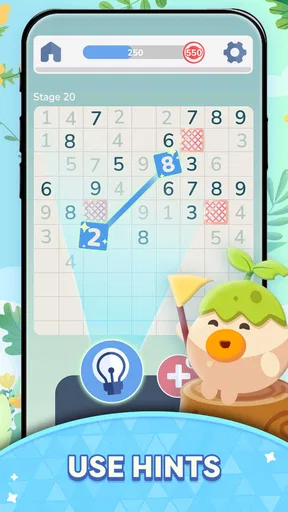
- Hints can reduce the satisfaction of solving difficult challenges.
- Later levels may become frustrating without much guidance.
- Ads may interrupt the flow for users on the free version.
- Limited variety may not appeal to players seeking complex gameplay.
Other Releases by BRAINWORKS PUBLISHING PTE. LTD.
View All
Hole Em All: Black Hole Games
Puzzle4.8

Mall Blitz
Board3.8

HoleCraft - Black Hole 3D Game
Action4.5

Find Triple Ball: Match Triple
Board4.6
Similar Picks in This Category
View All
Ludo King®
Gametion4.1

Ludo
Yarsa Games4.6

Tile Master® - Matching Game
Higgs Studio3.6

Checkers Online
CC Games4.6

Dominoes
Loop Games4.7

Chess
Chess Prince4.6
Frequently Asked Questions
What is NumMatch: Number Logic Puzzles?
NumMatch: Number Logic Puzzles is a casual brain-training game built around number-based challenges. It combines simple arithmetic, pattern recognition, matching, and logical deduction in short puzzle rounds. The controls are generally easy to understand, but later stages can require careful planning and concentration. It is designed for players who enjoy relaxing gameplay while keeping their minds active, whether during a short break or a longer puzzle session.
How does the gameplay in NumMatch work?
The main objective is to examine the numbers presented on the board and make the correct matches or moves according to each puzzle’s rules. Some levels can be completed quickly, while others require you to identify relationships, eliminate incorrect options, or think several steps ahead. The difficulty usually increases gradually, so new players can learn the mechanics before facing more demanding logic challenges.
Is NumMatch: Number Logic Puzzles suitable for beginners?
Yes, the game is accessible to beginners because its basic interactions are straightforward and the early puzzles act as a gentle introduction to the number-matching mechanics. However, being easy to start does not mean every level is simple. As the board layouts and objectives become more complex, players may need patience and trial-and-error. It is suitable for both casual users and experienced puzzle fans.
Can NumMatch be played offline?
Many puzzle games of this type allow players to complete at least their core levels without a continuous internet connection, which makes them convenient for travel or areas with limited connectivity. Nevertheless, certain features may depend on an internet connection, including advertisements, cloud synchronization, updates, leaderboards, or optional rewards. It is best to check the app’s current store description and test offline access after installation.
Does NumMatch contain ads or in-app purchases?
NumMatch: Number Logic Puzzles may include advertising or optional in-app purchases, depending on the version, platform, and region. Ads can sometimes appear between levels or when players request extra assistance, while purchases may offer an ad-free experience, hints, or other conveniences. Before downloading, review the App Store or Google Play listing for the latest pricing and payment details, especially if children will use the app.
Play our best games!


